
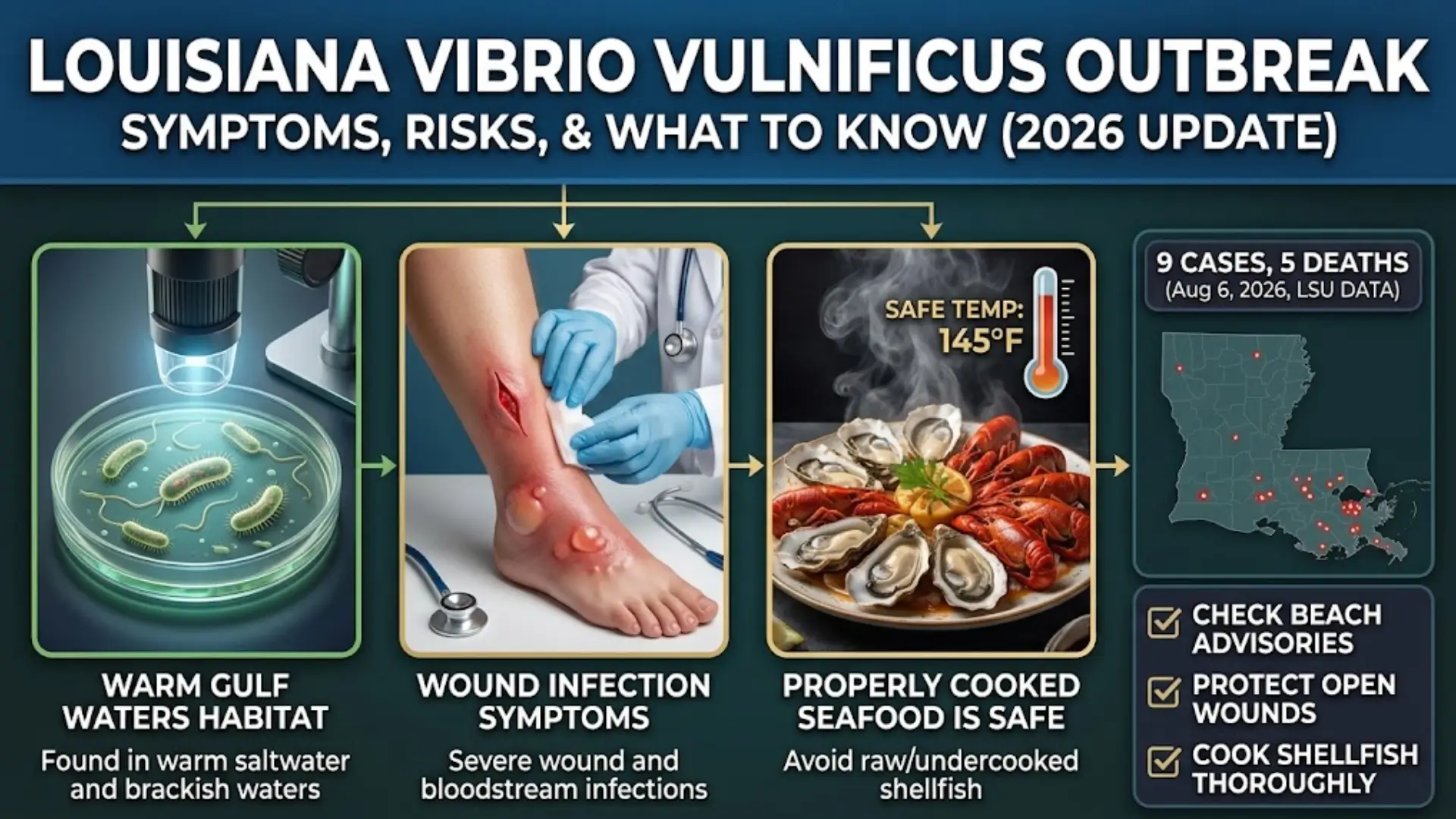
The Louisiana Vibrio vulnificus outbreak has drawn attention after state health officials reported multiple severe infections and deaths in 2026. As of August 6, the Louisiana Department of Health had reported nine Vibrio vulnificus cases and five deaths among Louisiana residents. All nine patients had been hospitalized, and health officials said the infections occurred after wounds were exposed to seawater.
Vibrio vulnificus is a naturally occurring bacterium found in warm coastal and brackish waters. Although infections are uncommon, they can become severe very quickly, particularly in people with certain underlying health conditions.
The current Louisiana situation does not mean that every person visiting the Gulf Coast is likely to become infected. Instead, public health guidance focuses on specific exposure risks, particularly allowing an open wound to contact coastal water and eating raw or undercooked shellfish.
This guide explains what is known about the Louisiana cases, how Vibrio vulnificus spreads, symptoms to watch for, who faces higher risk, and practical steps that can help prevent infection.
What Is Vibrio vulnificus?
Vibrio vulnificus is a type of bacteria that naturally lives in warm saltwater and brackish water.
Brackish water is water containing a mixture of fresh and salt water, such as areas where rivers meet coastal waters.
The bacterium is part of the larger Vibrio family. More than 20 Vibrio species can cause illness in humans, although Vibrio vulnificus is particularly concerning because it can cause severe wound infections and bloodstream infections.
Vibrio bacteria grow more readily in warmer coastal waters. In Louisiana, this makes warmer months an important period for prevention, particularly for people swimming, fishing, boating, wading, or handling seafood.
What Is Happening With Vibrio vulnificus in Louisiana?
The Louisiana Department of Health reported an increase in severe Vibrio vulnificus infections in the state during 2026.
According to reporting based on LDH information, nine Louisiana residents had been diagnosed with Vibrio vulnificus by August 6, 2026, and five had died. All nine patients were hospitalized. State officials said all nine infections followed wound exposure to seawater, and all patients had underlying health conditions.
The figures are notable when compared with Louisiana’s longer-term average.
During the previous 10 years, Louisiana averaged approximately seven Vibrio vulnificus cases and one death per year, according to the Louisiana Department of Health.
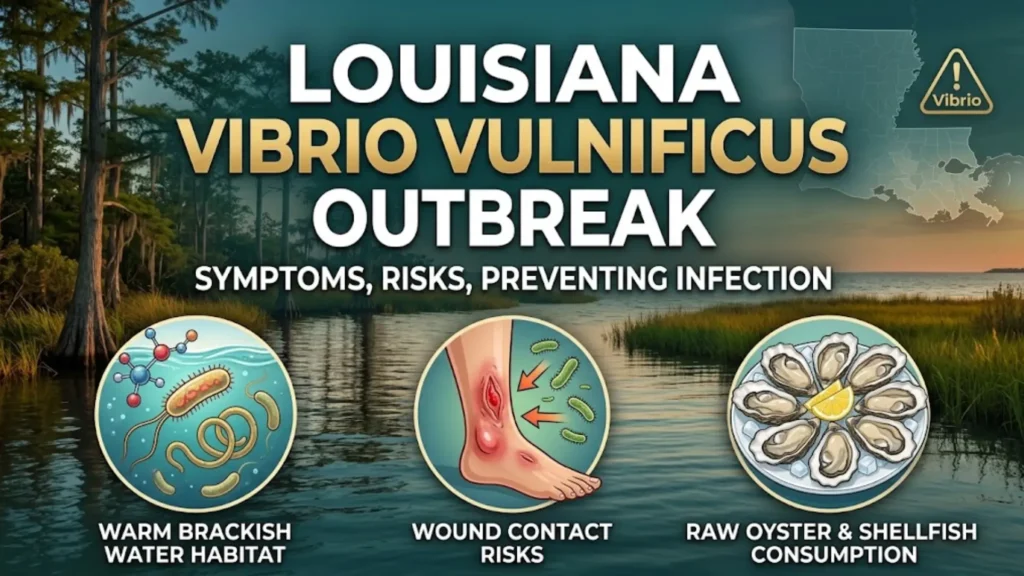
However, the 2026 figures should be understood as a snapshot rather than a final annual total. Case counts can change as additional infections are diagnosed and reported.
Is There a Louisiana Vibrio Outbreak?
The term “outbreak” is commonly used in coverage of the recent increase, but readers should distinguish between an increase in reported infections and a formally declared statewide outbreak.
The Louisiana Department of Health has warned about increased severe Vibrio vulnificus infections and has urged residents to take precautions. Its 2026 beach-monitoring program also publishes individual beach advisory information.
The available state information does not mean that all Louisiana beaches are contaminated or unsafe.
Beach conditions can differ from one location to another. LDH’s monitoring program lists individual sampling locations and whether an advisory is in effect, making the state beach-monitoring page an important resource for people planning coastal activities.
How Do People Get Vibrio vulnificus?
There are two major routes of exposure relevant to Vibrio vulnificus.
Open Wounds and Coastal Water
A person can become infected when an open wound comes into contact with saltwater or brackish water containing the bacteria.
The wound does not necessarily have to be large. Cuts, scrapes, recent surgical wounds, piercings, tattoos, and other breaks in the skin can provide an entry point.
This is particularly important for people who:
- Swim in coastal waters
- Go wading
- Fish
- Boat
- Walk along coastal areas
- Work around seawater
- Enter floodwater connected to coastal environments
Raw or Undercooked Seafood
Vibrio infections can also occur after eating raw or undercooked shellfish, particularly oysters.
CDC says most people with vibriosis acquire infection by eating raw or undercooked shellfish, especially oysters. For Vibrio vulnificus specifically, wound exposure is an especially important route of transmission.
People can also expose an open wound to raw seafood, seafood juices, or drippings.
What Are the Symptoms of Vibrio vulnificus?
Symptoms depend partly on how the infection occurs and whether it spreads into the bloodstream.
Possible symptoms include:
- Fever
- Chills
- Redness around a wound
- Pain
- Swelling
- Warmth around the wound
- Skin discoloration
- Fluid or discharge from a wound
- Blistering skin lesions
- Low blood pressure
- Diarrhea
- Stomach cramps
- Nausea
- Vomiting
CDC notes that bloodstream infections can produce fever, chills, dangerously low blood pressure, and blistering skin lesions. Wound infections can cause redness, pain, swelling, warmth, discoloration, and discharge.
How Quickly Can Vibrio vulnificus Become Serious?
Vibrio vulnificus infections can progress rapidly.
CDC reports that approximately one in five people with Vibrio vulnificus infection die, sometimes within one or two days of becoming ill. Some patients require intensive care or surgery, including removal of infected tissue or amputation.
That does not mean every infection will become life-threatening. However, the potential for rapid progression is why suspected severe infections require prompt medical attention.
A person with a wound exposed to coastal water who develops rapidly worsening pain, redness, swelling, discoloration, blistering, fever, or other concerning symptoms should seek medical care immediately.
Who Is at Higher Risk?
Anyone can become infected with Vibrio, but certain medical conditions increase the risk of severe illness.
CDC identifies several factors associated with increased risk, including:
- Liver disease
- Diabetes
- Cancer
- HIV
- Thalassemia
- Conditions that weaken the immune system
- Immune-suppressing medications
- Certain stomach conditions or surgeries
- Some medications that reduce stomach acid
The Louisiana Department of Health has similarly emphasized caution for people with underlying conditions, particularly liver disease, diabetes, and conditions affecting the immune system.
People in higher-risk groups should take extra care around warm coastal water and raw seafood.
Why Are Warm Coastal Waters Important?
Vibrio bacteria naturally occur in coastal environments, and warmer water can create conditions that support their growth.
CDC notes that Vibrio bacteria are naturally found in warm saltwater and brackish water. The bacteria are especially relevant during warmer months.
Louisiana’s coastal geography makes this an important public-health consideration.
The state’s coastline contains saltwater and brackish environments where Vibrio bacteria can naturally occur. This does not mean the bacteria are present at dangerous levels at every beach or on every day.
Instead, risk depends on factors such as water conditions, exposure, wounds, seafood consumption, and individual health factors.
Louisiana Beach Advisories and Vibrio Risk
Louisiana maintains a beach-monitoring program that provides information about individual recreational water sites.
The LDH monitoring page lists sampling dates and advisory statuses for beaches across the state. For example, the state’s July 2026 monitoring information showed that some locations had advisories while others did not.
A beach advisory can have different causes, so readers should check the specific advisory rather than assuming that every advisory is a Vibrio warning.
Before swimming or wading, residents and visitors should check the current Louisiana Department of Health beach-monitoring information, especially during periods of extreme heat, storms, flooding, or other unusual coastal conditions.
How Can You Prevent a Vibrio vulnificus Infection?
The CDC recommends two particularly important precautions:
- Do not eat raw or undercooked seafood.
- Do not allow an open wound to contact coastal water.
Additional prevention steps include keeping wounds covered with waterproof bandages, washing wounds thoroughly after exposure, and protecting the skin while handling raw shellfish.
Keep Open Wounds Out of Coastal Water
If you have an open cut, scrape, surgical wound, piercing, tattoo, or other break in the skin, avoid exposing it to saltwater or brackish water.
If exposure is unavoidable, CDC recommends covering the wound completely with a waterproof bandage.
If seawater or raw seafood contacts the wound, wash it thoroughly with soap and clean running water.
Cook Seafood Thoroughly
Cooking seafood properly can reduce the risk of Vibrio infection.
CDC recommends avoiding raw or undercooked oysters and other shellfish and provides specific cooking guidance for different types of shellfish.
People at increased risk should be particularly cautious about eating raw shellfish.
What Should You Do After a Wound Is Exposed to Seawater?
If an open wound comes into contact with coastal water, clean the area thoroughly with soap and clean running water.
Monitor the wound for signs of infection.
Seek medical attention promptly if the wound becomes increasingly painful, red, swollen, warm, discolored, or starts producing fluid. Fever, chills, blistering, or rapidly worsening symptoms are also important warning signs.
When speaking with a healthcare professional, explain the exposure.
Mentioning that a wound recently contacted saltwater or brackish water can help the healthcare provider consider Vibrio as a possible cause of infection.
Can Vibrio vulnificus Spread From Person to Person?
Person-to-person transmission of Vibrio vulnificus has not been reported as a typical route of infection.
The main concerns are environmental and food exposures, particularly wound contact with coastal water and consumption of raw or undercooked seafood.
This is different from respiratory infections that can spread readily between people through coughing or sneezing.
How Is Vibrio vulnificus Diagnosed?
A healthcare provider can diagnose a Vibrio infection by identifying the bacteria in a clinical sample.
Depending on the symptoms, testing may involve:
- A wound sample
- Blood testing
- Stool testing
CDC recommends considering Vibrio when someone has a compatible illness and a relevant exposure history, such as eating raw seafood or exposing an open wound to coastal water.
For suspected wound infections, prompt treatment is important. CDC specifically advises that treatment for suspected severe Vibrio vulnificus wound infection should not be delayed while waiting for laboratory confirmation.
How Is Vibrio vulnificus Treated?
Treatment depends on the type and severity of infection.
Mild intestinal Vibrio illness may not require antibiotics, although maintaining hydration is important.
Severe infections require medical treatment. CDC states that early antibiotic treatment and early surgical intervention can improve survival for Vibrio vulnificus wound infections.
Some severe wound infections require surgery to remove infected or dead tissue. In serious cases, amputation may be necessary.
Treatment decisions should be made by healthcare professionals based on the patient’s symptoms, exposure history, examination, and test results.
Is Vibrio vulnificus the Same as “Flesh-Eating Bacteria”?
Vibrio vulnificus is sometimes described in news coverage as a “flesh-eating bacteria,” but that phrase can be misleading.
Vibrio vulnificus can cause necrotizing fasciitis, a severe infection that destroys tissue around a wound. However, CDC notes that necrotizing fasciitis can be caused by several different bacteria, and group A Streptococcus is the most common cause in the United States.
Using the scientific name, Vibrio vulnificus, is more precise when discussing the Louisiana cases.
What About Louisiana’s 2025 Vibrio Cases?
The 2026 situation follows an elevated period in Louisiana during 2025.
On July 31, 2025, the Louisiana Department of Health reported 17 Vibrio vulnificus cases and four deaths among Louisiana residents. All 17 patients had been hospitalized, and 75% reported wound or seawater exposure.
LDH said that during the same period over the previous 10 years, Louisiana had averaged seven cases and one death annually.
These 2025 figures should not be combined with the 2026 count. They represent separate years and separate surveillance periods.
What Does the CDC Say About Vibrio Surveillance?
CDC tracks Vibrio infections through the Cholera and Other Vibrio Illness Surveillance system, known as COVIS.
The system collects information about patients, underlying health conditions, seafood consumption, water exposure, raw or live seafood, marine life, and potential seafood sources.
CDC also publishes provisional weekly surveillance data for vibriosis. These national data can change as reports are reconciled with state and local health departments, so provisional numbers should not automatically be treated as final counts.
Does the Louisiana Situation Mean People Should Avoid the Beach?
Not necessarily.
The public-health guidance focuses on reducing specific exposure risks rather than suggesting that everyone avoid Louisiana’s coastline.
People can reduce risk by:
- Avoiding coastal water when they have open wounds
- Covering wounds with waterproof bandages
- Washing exposed wounds promptly
- Avoiding raw or undercooked shellfish
- Checking Louisiana beach advisories
- Taking extra precautions if they have medical conditions associated with severe Vibrio infection
The Louisiana Department of Health’s beach-monitoring program provides current information for individual monitored locations.
Frequently Asked Questions
Is there a Vibrio vulnificus outbreak in Louisiana?
Louisiana health officials have reported an increase in severe Vibrio vulnificus infections and have urged residents to take precautions. As of August 6, 2026, nine cases and five deaths had been reported in the state.
How many Vibrio vulnificus cases are in Louisiana in 2026?
The Louisiana Department of Health had reported nine cases as of August 6, 2026. All nine patients had been hospitalized, and five had died.
How do people get Vibrio vulnificus in Louisiana?
A major route is exposing an open wound to saltwater or brackish water containing the bacteria. Infection can also occur from eating raw or undercooked shellfish, particularly oysters.
What are the first symptoms of Vibrio vulnificus?
Symptoms can include fever, chills, wound redness, pain, swelling, warmth, discoloration, and discharge. More severe infections can cause blistering skin lesions, dangerously low blood pressure, and bloodstream infection.
Who is most at risk from Vibrio vulnificus?
People with certain underlying conditions, including liver disease, diabetes, cancer, HIV, and immune-system problems, have a higher risk of severe infection.
Can you get Vibrio from an open cut at the beach?
Yes. Vibrio vulnificus can enter the body through an open wound that contacts contaminated saltwater or brackish water. CDC recommends keeping open wounds out of coastal water whenever possible.
Can you eat oysters during a Vibrio warning?
Raw or undercooked oysters carry a Vibrio risk. CDC recommends eating seafood that has been properly cooked rather than raw or undercooked shellfish.
When should someone seek medical care?
Seek medical attention promptly for a wound that becomes increasingly painful, red, swollen, discolored, or develops discharge after exposure to coastal water or raw seafood. Fever, chills, blistering, or rapidly worsening symptoms require urgent medical attention.
Conclusion
The Louisiana Vibrio vulnificus outbreak highlights the importance of understanding a rare but potentially severe bacterial infection associated with warm coastal waters and raw or undercooked seafood. Louisiana health officials reported nine cases and five deaths by August 6, 2026, with all reported cases involving seawater-exposed wounds.
The most important prevention steps are straightforward: keep open wounds away from saltwater and brackish water, cover wounds when exposure is possible, clean exposed wounds thoroughly, and avoid raw or undercooked shellfish. People with medical conditions that increase the risk of severe infection should take additional precautions.
Anyone who develops concerning symptoms after a relevant water or seafood exposure should seek medical care promptly and tell the healthcare provider about the exposure.