
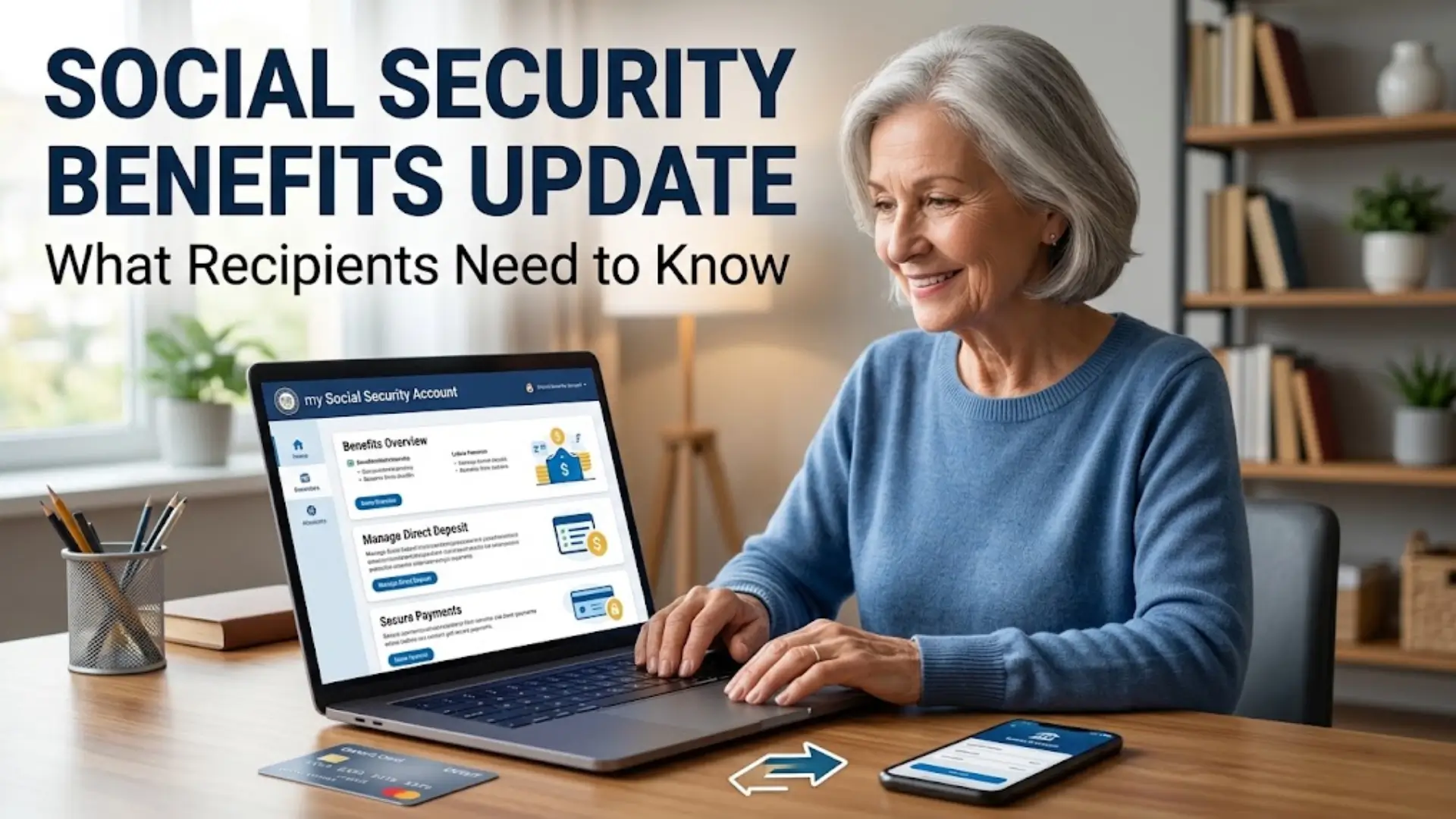
The latest Social Security electronic benefits update is important for anyone who receives Social Security or Supplemental Security Income (SSI), particularly beneficiaries who previously relied on paper checks. Federal benefit payments are now generally required to be delivered electronically, and the Social Security Administration (SSA) is continuing its transition away from paper checks.
For most recipients, this change does not mean a reduction in benefits or a change to eligibility. Instead, it concerns how benefits are delivered. Beneficiaries can generally receive payments through direct deposit into a bank account or through the Direct Express® card program if they do not have a traditional bank account.
SSA has also expanded digital services through personal my Social Security accounts, allowing recipients to manage direct deposit, review benefit information, change certain personal details, and access other services online.
Here is what Social Security recipients should know about the electronic benefits update, payment options, direct deposit changes, and what to do if a payment is missing.
What Is the Social Security Electronic Benefits Update?
The Social Security electronic benefits update refers primarily to the federal government’s transition to electronic delivery of benefit payments.
Under federal law, federal benefit payments are generally required to be made electronically unless an exception or waiver applies. The Treasury Department says federal benefit payments must now be delivered electronically through methods such as direct deposit or an electronically delivered payment option.
SSA announced in June 2026 that it planned to complete the transition to electronic payments for all beneficiaries during the year. The agency encouraged anyone still receiving paper checks to move to an electronic payment method.
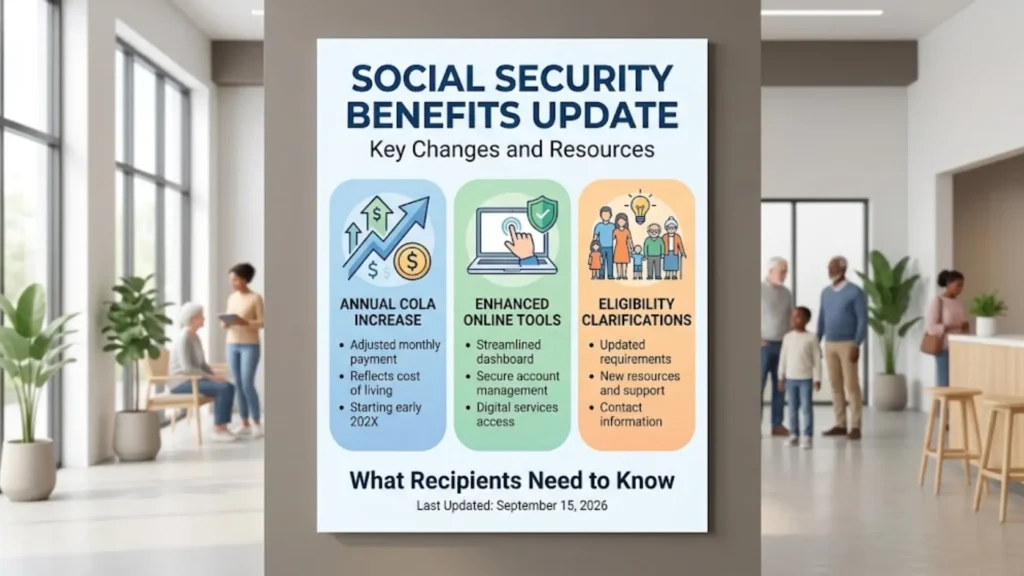
This is important because the change affects the delivery method, not the basic eligibility rules for Social Security retirement, survivor, or disability benefits.
Does This Mean Social Security Benefits Are Being Cut?
No.
The move to electronic payments does not itself represent a cut to Social Security benefits.
The purpose of the transition is to change how federal benefit payments are delivered. Instead of relying on a physical check sent through the mail, payments can be transferred electronically to an eligible account or payment card.
The SSA describes electronic payments as faster, more secure and more convenient than paper checks.
Therefore, recipients should not interpret the electronic benefits update as an automatic reduction in their monthly Social Security payment.
Why Is Social Security Moving Away From Paper Checks?
There are several reasons behind the transition.
Greater Security
Electronic payments reduce some of the risks associated with lost, stolen, altered or undelivered paper checks.
SSA says paper checks are substantially more likely to be lost, stolen, altered or returned as undeliverable than electronic payments.
Faster Payment Delivery
Electronic funds transfers can move money directly into an account instead of requiring recipients to wait for a mailed check.
Treasury explains that direct deposit is designed to make federal payments available electronically and efficiently.
Lower Administrative Costs
Electronic payments are also less expensive for the federal government to process than paper checks.
Treasury identifies direct deposit as a safe, secure, efficient and less expensive alternative to paper payments.
How Can Social Security Recipients Receive Their Benefits?
There are two primary electronic payment options for Social Security and SSI recipients.
1. Direct Deposit
Direct deposit sends the benefit payment directly into an eligible bank account.
SSA identifies direct deposit as the preferred electronic payment method for people who have a bank account. Beneficiaries can generally set up or change direct deposit through their personal my Social Security account.
Direct deposit can be useful because recipients do not have to deposit a paper check manually each month.
2. Direct Express Card
People who do not have a bank account can use the Direct Express® program to receive federal benefit payments electronically.
The Direct Express card is a prepaid debit card designed to receive federal benefit payments. SSA continues to list it as an electronic payment option for people who do not have a traditional bank account.
How to Change Your Social Security Direct Deposit Information
If your bank account changes, it is important to update your payment information.
SSA says beneficiaries can update direct deposit information online through their personal my Social Security account. Depending on the type of benefit, other methods may also be available.
The basic process is:
- Sign in to your personal my Social Security account.
- Locate the direct deposit or payment information section.
- Enter the required new bank information.
- Review the information carefully.
- Submit the update.
- Check your account to confirm that the information is correct.
SSA also says some banks can electronically send updated direct deposit information to Social Security through an enrollment process.
Important Tip Before Changing Bank Accounts
Do not close an old account immediately after submitting a direct deposit change.
Make sure the new payment arrangement is properly established before closing the previous account. This can help reduce the risk of a payment being sent to an account that has already been closed.
What Is the my Social Security Account?
A personal my Social Security account is SSA’s online gateway for managing Social Security information and services.
Recipients can use the account to perform several tasks without necessarily visiting an SSA office or making a phone call. Available services include:
- Setting up or changing direct deposit
- Checking benefit information
- Getting proof of benefits
- Accessing tax forms
- Reviewing certain personal information
- Changing an address or telephone number
- Checking application status
- Reviewing Social Security statements
- Viewing personalized benefit estimates
SSA introduced additional improvements to the online portal in 2026, including a redesigned interface and an updated retirement calculator.
Why Should Beneficiaries Create a my Social Security Account?
Creating an account can make it easier to manage benefits online.
SSA says the account allows users to access information securely, manage certain benefit-related tasks, review earnings information and obtain documents such as benefit verification letters.
For people concerned about payment information, the account can also provide a convenient way to review or update direct deposit details.
However, beneficiaries should always access their account through the official SSA website rather than clicking an unfamiliar link in a text message or email.
What If You Do Not Have a Bank Account?
Not having a traditional bank account does not necessarily prevent you from receiving Social Security electronically.
SSA identifies the Direct Express card as an option for beneficiaries without a bank account. Treasury also provides information about electronic federal benefit payments and options for people who need help switching from paper checks.
Recipients can also explore legitimate banking options through federally supported resources if they want to open an account.
Can Someone Still Receive a Paper Check?
The federal government has moved away from routine paper benefit checks.
SSA says federal law requires federal benefit payments to be made electronically, while Treasury provides for limited exceptions and waiver procedures in certain circumstances.
This means someone who has a legitimate difficulty using electronic payments should not simply assume that a paper check will continue indefinitely.
People who believe they qualify for an exception should contact the appropriate Treasury or Social Security resources and follow the official waiver process.
What If You Cannot Use Electronic Payments?
SSA recognizes that some beneficiaries may face circumstances that make electronic payments difficult.
The agency says exceptions can be available in extremely rare circumstances, and Treasury handles the waiver process. SSA directs people seeking more information about an exception to Treasury.
Possible difficulties can include circumstances involving access to financial institutions or other challenges that make electronic payment impractical.
The safest approach is to contact the government through official channels rather than relying on information shared through social media or unofficial websites.
What Should You Do If Your Social Security Payment Is Missing?
A missing electronic payment does not automatically mean that Social Security has stopped your benefits.
SSA’s 2026 retirement guidance says recipients who do not receive an electronic payment on its due date should first contact their bank or financial institution because the institution may experience a posting delay. If the payment is still missing, the recipient can contact Social Security.
If you are waiting for a payment:
- Check your bank or Direct Express account.
- Confirm the expected payment date.
- Review whether your banking information is correct.
- Contact your financial institution if the payment has not posted.
- Contact SSA if the payment remains missing.
SSA’s main telephone number is 1-800-772-1213, with TTY service available at 1-800-325-0778.
Is the Electronic Benefits Update the Same as a Social Security Payment Schedule Update?
No.
This distinction is important.
An electronic benefits update concerns how Social Security payments are delivered and how beneficiaries manage payment information.
A payment schedule update concerns when a particular benefit payment is scheduled to arrive.
The electronic-payment transition should not be confused with routine changes to monthly payment dates.
Likewise, it should not automatically be interpreted as a new COLA announcement, benefit increase or benefit reduction.
Is the Direct Express Program Changing?
Yes, there is an important 2026 development involving Direct Express.
The U.S. Department of the Treasury selected Fifth Third Bank as the new financial agent for the Direct Express program. SSA announced that new Direct Express enrollments with Fifth Third Bank began in May 2026, while existing cardholders are expected to transition later in 2026 or early 2027.
Existing Direct Express cardholders should continue to follow official communications about their individual transition.
SSA has advised beneficiaries to keep their contact information current so they can receive advance notices about the change.
What Does the Direct Express Change Mean for Existing Cardholders?
Existing cardholders should not assume that they need to immediately replace their card simply because the financial agent is changing.
SSA says existing accounts will transition later and that beneficiaries will receive advance notice. The agency also says existing cardholders should continue using their current Comerica-issued cards following the transition until the card expires, according to the agency’s guidance.
Because transition details can vary, cardholders should rely on official Direct Express and SSA communications.
Can Social Security Beneficiaries Manage Their Benefits Online?
Yes.
The expansion of electronic payments is part of a broader effort to make more Social Security services available online.
Through a personal my Social Security account, beneficiaries can manage several services, including direct deposit, benefit verification and certain contact information.
This can reduce the need for office visits and telephone calls for routine tasks.
What About Social Security Overpayment Repayments?
The electronic-payment modernization also affects people who owe money to Social Security because of an overpayment.
In 2026, SSA expanded secure electronic options for repaying overpayments. Beneficiaries who receive an overpayment notice can use Pay.gov or their bank or credit union’s online bill-pay service when the appropriate remittance information is available.
This is separate from receiving monthly Social Security benefits, but it is another part of the agency’s broader move toward digital payment services.
How Can Beneficiaries Protect Themselves From Social Security Scams?
Whenever there is a major payment change, scammers may try to exploit confusion.
Be especially careful with messages claiming that you must immediately:
- Pay a fee to keep receiving Social Security
- Provide your Social Security number through an unknown website
- Give someone your bank password
- Transfer money to “protect” your benefits
- Purchase gift cards
- Send cryptocurrency
- Click an unexpected payment-update link
Use official SSA and Treasury websites to verify information.
A genuine government payment change should never require you to give sensitive banking credentials to an unknown person.
Important Steps Social Security Recipients Should Take Now
If you receive Social Security or SSI, consider taking these steps:
Check Your Payment Method
Know whether your benefits are going to a bank account or another approved electronic payment method.
Review Your Bank Information
If your bank account has changed recently, make sure your Social Security payment information is also updated.
Create a my Social Security Account
A personal account can make it easier to manage many routine Social Security services online.
Keep Your Contact Information Current
This is particularly important for people enrolled in programs undergoing administrative changes, such as Direct Express.
Watch for Official Notices
Read letters and electronic communications from SSA or Treasury carefully, particularly if they concern payment methods or account changes.
Avoid Unofficial Payment Information
Social media posts and viral videos can contain outdated or inaccurate claims. Confirm important benefit information through official government sources.
Social Security Electronic Benefits Update: Key Takeaways
The most important points are straightforward:
- Social Security is continuing its transition to electronic benefit payments.
- Federal benefit payments are generally required to be delivered electronically.
- Direct deposit is the primary electronic option for people with bank accounts.
- Direct Express provides an electronic option for eligible beneficiaries without traditional bank accounts.
- Beneficiaries can manage many payment-related services through their personal my Social Security account.
- Paper checks are no longer the standard payment method.
- Limited exceptions may exist for people who qualify for a waiver.
- Direct Express is undergoing a financial-agent transition in 2026 and 2027.
- A missing payment should first be checked with the financial institution before contacting SSA.
- Beneficiaries should rely on official SSA and Treasury information for payment changes.
Frequently Asked Questions
What is the latest Social Security electronic benefits update?
The latest major update is the continued transition to electronic federal benefit payments. SSA announced in June 2026 that it planned to complete the transition for beneficiaries during the year.
Do Social Security recipients have to use direct deposit?
Federal benefit payments are generally required to be electronic. Recipients can typically use direct deposit or another approved electronic payment method such as Direct Express. Limited exceptions may be available through Treasury.
What if I still receive a Social Security paper check?
If you are still receiving a paper check, you should contact Social Security or Treasury to determine the appropriate electronic payment option or whether you qualify for an exception. SSA encourages beneficiaries still receiving paper checks to switch to electronic payments.
Can I change my Social Security direct deposit online?
Yes. Eligible beneficiaries can generally update direct deposit information through their personal my Social Security account. SSA also provides other options depending on the benefit type and circumstances.
What if I don’t have a bank account?
The Direct Express program is an electronic payment option for people who do not have a traditional bank account.
Has Social Security changed the amount of my benefits because of electronic payments?
The electronic-payment transition concerns how benefits are delivered. It does not itself represent a Social Security benefit cut.
What should I do if my electronic Social Security payment is late?
First contact your bank or financial institution because a payment may be delayed in being posted. If the payment remains missing, contact Social Security at 1-800-772-1213 or your local SSA office.
Is Direct Express changing in 2026?
Yes. Treasury selected Fifth Third Bank as the new financial agent for Direct Express. New enrollments with Fifth Third Bank began in May 2026, while existing cardholder accounts are expected to transition later in 2026 or early 2027.
Final Thoughts
The Social Security electronic benefits update is primarily about modernizing how beneficiaries receive and manage federal benefit payments. For most recipients, the change means using direct deposit or another approved electronic payment method instead of relying on a paper check.
The transition also makes online account management increasingly important. Beneficiaries can use a personal my Social Security account to manage direct deposit and access important benefit information.
If your payment information has changed, review your account and update it through official SSA channels. If you do not have a bank account or cannot use electronic payments, review the available alternatives and exception procedures with Social Security or Treasury.
Most importantly, do not rely on viral claims about Social Security payments. For changes that affect your benefits, always verify the information through official government sources.